
Compliant and complete user interactions data for UX researchers
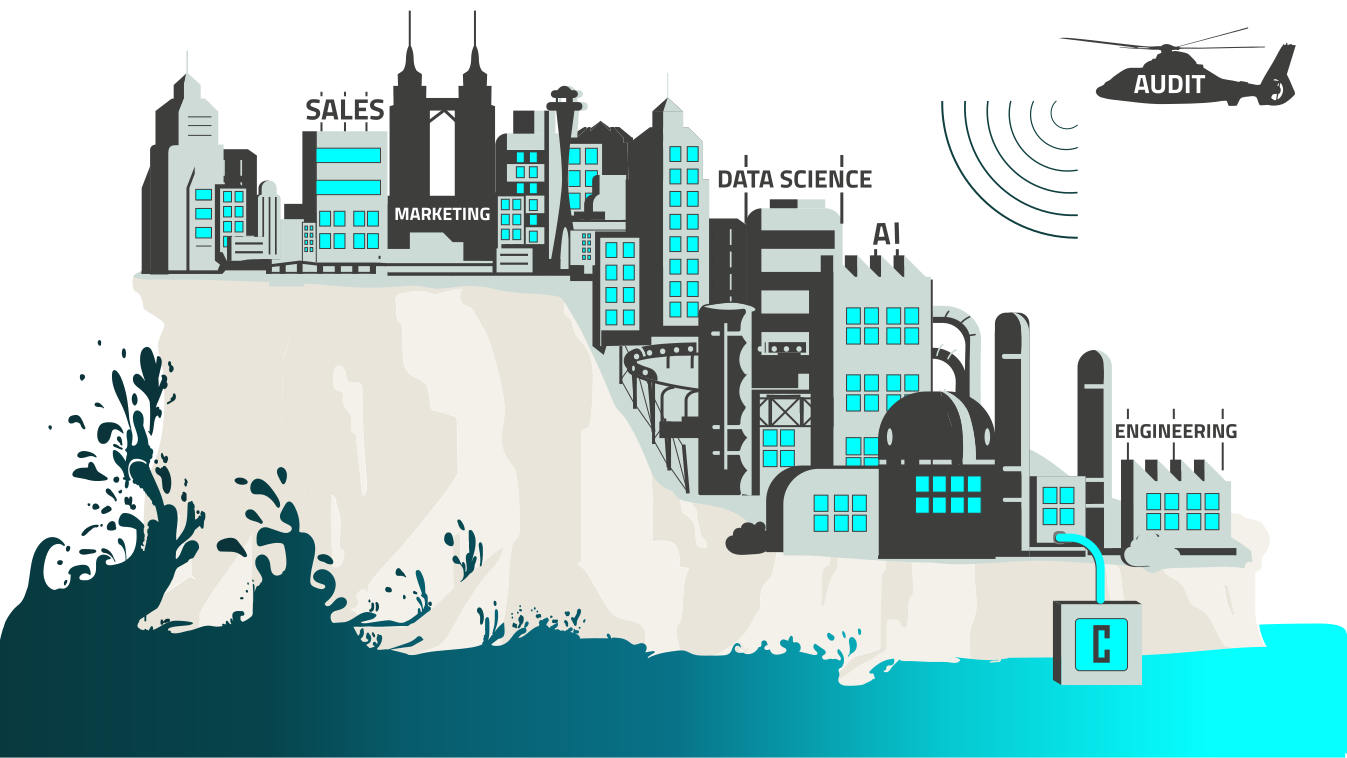
Stop building on sand: When you are trying to understand your users, the collected data is usually user-related, meaning legal and technical limitations erode your data. Our privacy-first approach captures as much data as legally and technically possible, supplemented by synthetic data points, to provide you with a rock-solid foundation for UX research.
Avoid this problem: Low-quality user insights and the risk of fines
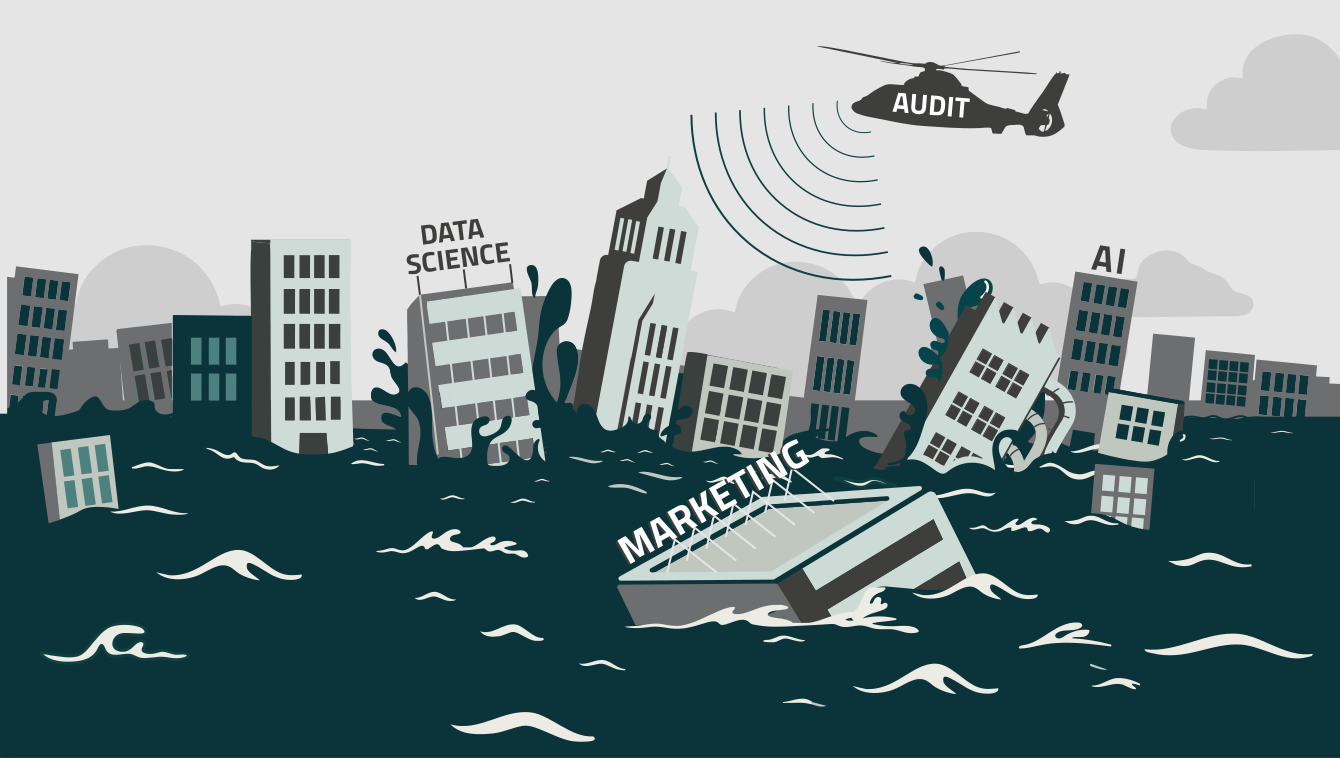
The more blind spots your data has the less robust your insights and UX recommendations are. You are also more likely to require more qualitative data to augment your quantitive data. This can become a problem due to the known discrepancy between what users say they want and what the data actually shows.
Additionally, if you ignore compliance requirements, you could easily upset your users and the authorities alike, something that could be more detrimental to business objectives than a sub-par user experience.
Our approach: UX research data that is both compliant and complete
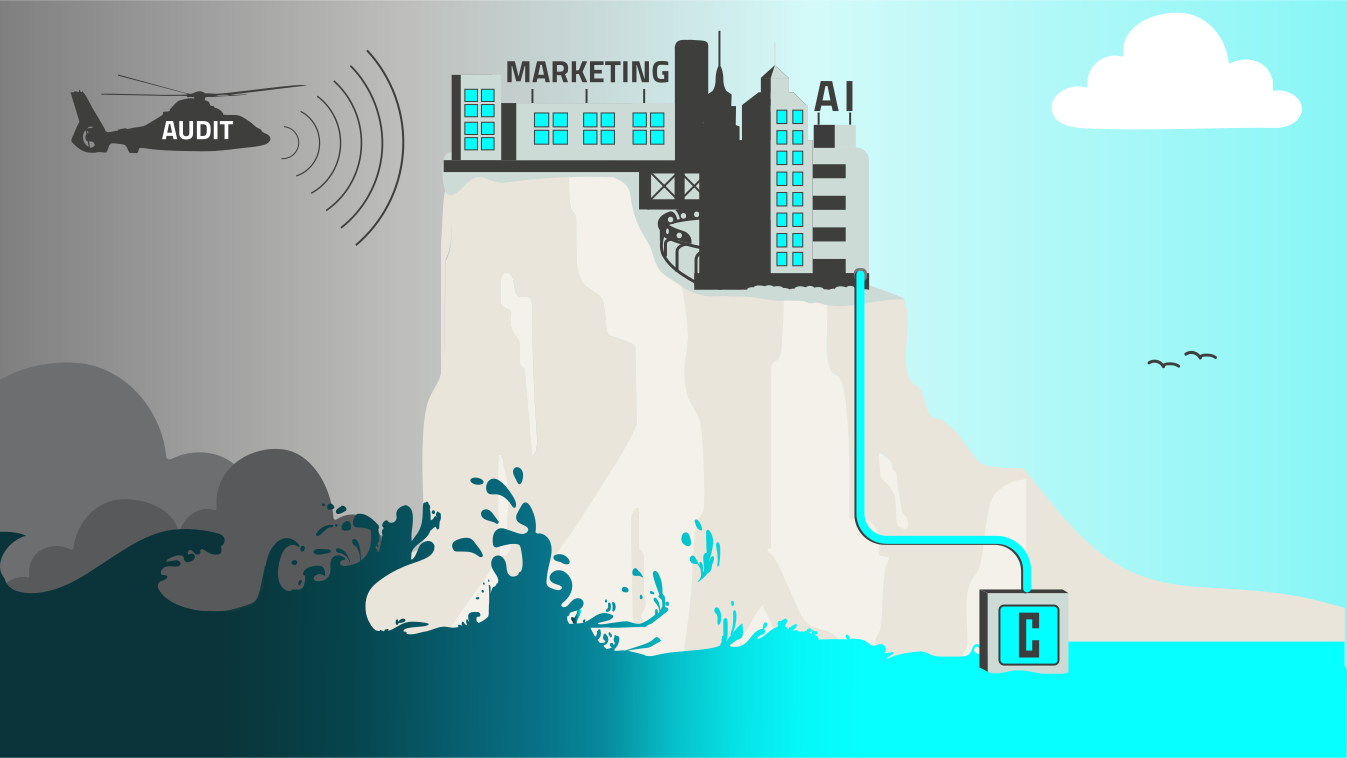
Contrary to popular belief, lawful UX research data doesn’t mean less data. It can still be complete, but it requires a much more sophisticated approach:
We call it the Data Cape because of its ability to resist data erosion and data loss, similar to how a geological cape is able to resist land erosion.
We use this approach to measure the perceived user experience as accurately as possible to support your work and the teams you interact with.
The outcome: No more data worries, you can focus on your research
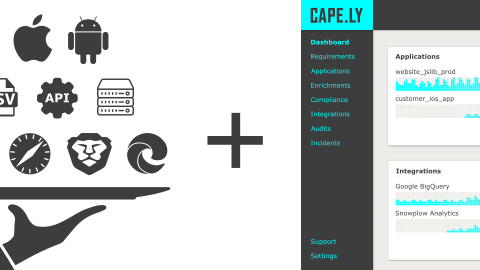
User experience research is a full-time job and requires your full attention. That’s why we don’t just use our compliance platform to provide you with the necessary research data. Instead, we bundle it with corresponding implementation services.
The this being taken care of, you don’t have to worry about anything that happens upstream before you receive the data for your UX research purposes.